Best Board Games for 5 Year Olds
Disclaimer: This post may contain affiliate links. As an Amazon Associate, we earn from qualifying purchases.
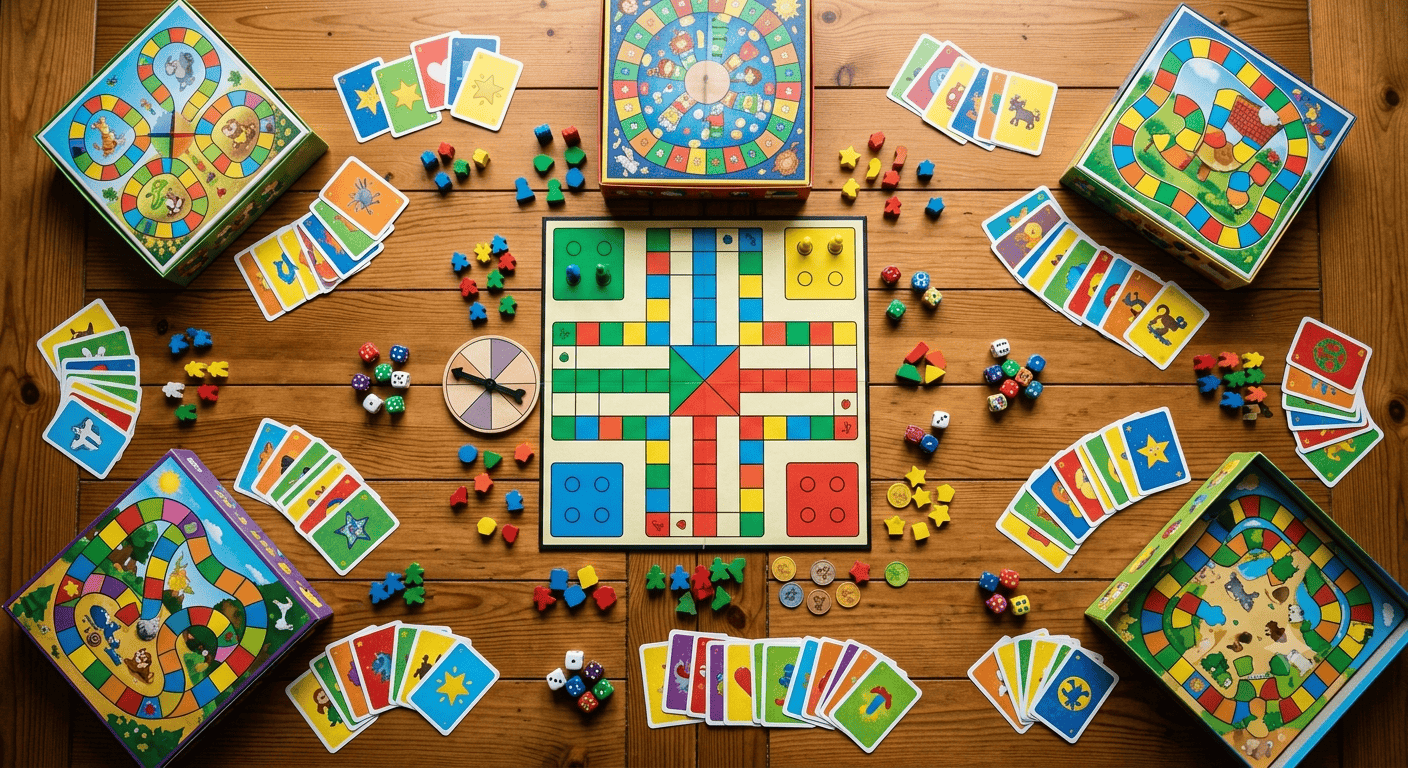
A board game can go wrong surprisingly fast with a 5-year-old. The rules take too long, someone gets sent back to the beginning, or the game keeps going long after the child has stopped caring who wins.
The best board games for 5 year olds avoid those problems in different ways. Some finish in ten minutes. Some put everyone on the same team. Others use pictures, stacking, or simple strategy so children can play without needing to read.
The games below are grouped by the problem they solve, whether that is frustration with losing, a short attention span, limited reading skills, or a child who is ready for something more challenging.
Quick Answer: Zingo is the easiest place to start for a child who needs fast turns and no reading. Outfoxed is the better choice when losing to another player causes problems. For a child who already understands basic game rules and wants more strategy, Sequence for Kids is the strongest next step.
This guide is part of our larger gift guide for 5 year old boys, organized by category if board games aren’t quite the right fit for your son.
| Game | Best For | Reading Needed? | Play Time |
|---|---|---|---|
| Zingo | Short attention spans, new to games | No | 10 min |
| Outfoxed | Kids who find losing hard | No | 15 min |
| Cauldron Quest | Fantasy lovers, advanced cooperative play | No | 15-20 min |
| Sleeping Queens | Advanced pick to grow into | No | 15 min |
| Sequence for Kids | Beginner strategy | No | 15-20 min |
| Connect 4 | One-on-one, thinking ahead | No | 10 min |
| Animal Upon Animal | Tactile kids, non-readers | No | 15 min |
| Candy Land | Very young 5s, first game ever | No | 15 min |
| Trouble | Family game night, multiple kids | No | 30 min |
| Ticket to Ride First Journey | Advanced 5s, grow-into game | No | 15-30 min |
For the Kid Who Finds Losing Hard: Cooperative Games
Cooperative games put everyone on the same team. The whole table either succeeds or fails together, which removes the pressure of losing directly to another player and can make family play easier for a child who finds losing especially difficult.
Outfoxed! by Gamewright
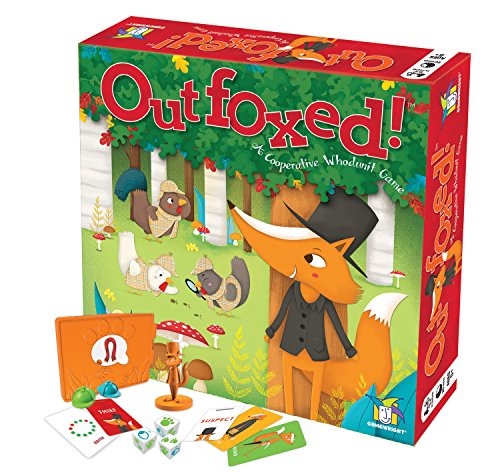
Ages 5+ | 2-4 players | ~15 minutes
Mrs. Plumpert’s pot pie has been stolen and a sneaky fox is making a run for it. Players roll dice, collect clues, and use a decoder device to eliminate suspects before the fox escapes. It is essentially a cooperative Clue designed for younger kids.
The decoder slider is the standout feature. Kids pull the panel to reveal whether a suspect matches the clue, and that reveal gives each round a satisfying detective moment that keeps children involved in the search. The suspect cards are on the thinner side and may need more careful handling.
Skip it if your child specifically enjoys beating another player. A cooperative game where everyone wins together will feel anticlimactic to a kid who wants to come out on top.

Cauldron Quest by Peaceable Kingdom — Advanced Cooperative Pick

Ages 6+ | 2-4 players | ~15-20 minutes
Players work together as wizards trying to brew a magic potion before an evil wizard blocks the path. It involves dice rolling, ingredient tokens, and real strategy decisions rather than pure luck. The changing ingredient and path decisions give each round some variation.
Cauldron Quest is more complex than Outfoxed. The box says 6+, and that is a reasonable guide. Some 5-year-olds handle it fine with a parent guiding the strategy, but it plays best once kids are closer to 6 and can follow the decision-making more independently.
Skip it if your child still needs a lot of help following multi-step rules. Start with Outfoxed and move to Cauldron Quest once your child is comfortable with cooperative rules.
For the Kid Who Needs to Move Fast: Quick-Play Games
Short attention spans are not a problem. They just need the right format. These games finish quickly and move fast enough to hold interest from start to finish.
Zingo by ThinkFun

Ages 4+ | 2-7 players | ~10 minutes
Zingo is bingo with a mechanical twist. A sliding tile dispenser called the Zinger shoots out two picture tiles at a time. If you have that picture on your card, you claim it. First to fill their card wins.
No reading required. No waiting around. Kids want to be the one to slide the Zinger, and games finish in minutes, making it easy to play another round without committing to a long session. The tiles and playing boards are made from thick cardboard. It can also work across mixed ages because younger children can match pictures while older children compete on speed.
Skip it if your child already plays Sequence or Connect 4 comfortably. A confident 5-year-old may find Zingo too simple to hold their interest.
Sleeping Queens by Gamewright — Advanced Pick to Grow Into

Ages 8+ | 2-5 players | ~15 minutes
Sleeping Queens is not a standard recommendation for most 5-year-olds. It belongs here only as a grow-into option for children who already handle multi-step card games comfortably.
The box says 8+, but some children who pick up rules quickly can play a simplified version by setting aside the number cards and skipping the math element. What remains is a fast card game where players use king cards to wake sleeping queens, knights to steal them, and dragons to defend. You can add the math element back in gradually as they get more comfortable.
Skip it if your child still needs frequent reminders about card actions or turn order.
For the Kid Who Likes to Think: Strategy Games
Some 5-year-olds want to feel like they figured something out rather than relying entirely on luck. These games introduce basic strategy in a format that is completely accessible at this age.
Sequence for Kids by Jax

Ages 3-6 | 2-4 players | ~15-20 minutes
Play an animal card, place your chip on the matching animal on the board, and get four in a row to win. Wild cards let you place anywhere or remove an opponent’s chip, which is where the strategy comes in.
No reading required, and the concept clicks fast. That small sense of control from the wild cards can make it more engaging than a game based entirely on luck. The simple matching rules make it easier for younger and older children to play together than in many strategy games.
Skip it if your child is not yet comfortable with basic turn-taking. Start with Zingo and come back to Sequence once they have a few games under their belt.
Connect 4 by Hasbro
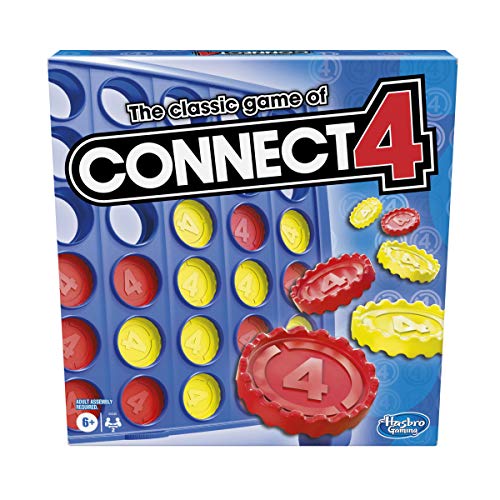
Ages 6+ | 2 players | ~10 minutes
Two players. Drop colored discs. Get four in a row. Simple enough to explain in 30 seconds, with enough depth that adults still get genuinely competitive about it.
Although the box recommends ages 6 and up, many 5-year-olds who understand turn-taking and matching patterns can learn it with an adult. Children can begin learning to plan one move ahead, block an opponent, and notice simple patterns. Games are fast and cleanup is easy.
Skip it if your child gets frustrated with head-to-head competition. This one is strictly two players and the competition is direct, which does not suit every temperament.
If your son’s love of figuring things out goes beyond the game table, our guide to STEM toys for 5 year olds has picks built around the same kind of cause-and-effect thinking: marble runs, puzzle builders, and gentle circuit kits.
For the Kid Who Needs Zero Reading: Picture-Based Games
A 5-year-old who is not reading yet can absolutely enjoy board games. These rely entirely on colors, pictures, or physical play.
Candy Land by Hasbro

Ages 3+ | 2-4 players | ~15 minutes
Candy Land relies almost entirely on luck. Draw a card, move to the matching color. No decisions, no reading, no complexity. For a child being introduced to board games for the very first time, that is exactly the point. It teaches the basics: sit at a table, wait your turn, move your piece, enjoy the theme. The current version’s cards bend more easily than older editions, so handle with care.
Skip it if your child already understands turn-taking and wants decisions that affect the outcome. It is designed mainly as an introduction to basic game play.
Trouble by Hasbro
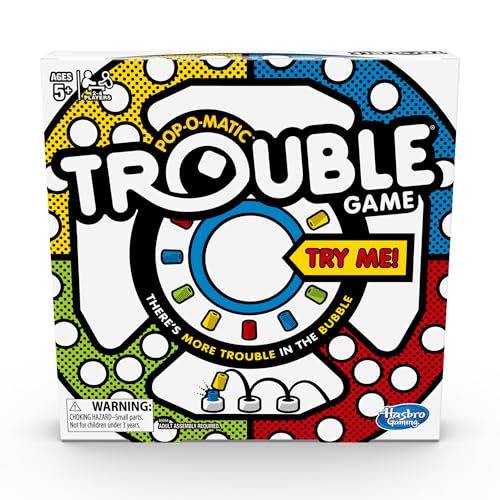
Ages 5+ | 2-4 players | ~30 minutes
Race your four pegs around the board, pop the bubble to roll the die, and send other players back to start when you land on them. The Pop-O-Matic bubble is the hook. Kids want to press it, and it also solves the die-rolling-off-the-table problem familiar to every parent of a 5-year-old.
Trouble is a step up from Candy Land. There is counting, some light choice about which peg to move, and the fun of bumping another player back. It supports up to four players, but rounds can run longer when several pieces keep getting sent back to start.
Skip it if your child gets upset when their piece gets sent back. That is the main mechanic, and a child who takes it personally will not enjoy it.
For the Kid Who Wants Something with More Depth
Some 5-year-olds are genuinely ready for more. These games have enough substance to keep adults engaged too, and they grow with the child rather than being outgrown quickly.
Animal Upon Animal by HABA

Ages 4+ | 2-4 players | ~15 minutes
Stack wooden animals on a crocodile without letting the pile fall. The die tells you how many to place, whether to give one to another player, or whether to extend the base.
This is more of a dexterity game than a traditional board game, and that is exactly why it works so well for certain kids. A 5-year-old who does not have the patience for card games or complex setups will often sit down for this one because they can see and touch everything immediately. Buyers frequently praise the thick wooden pieces and overall construction. The physical challenge gives children a realistic chance of beating adults, which can make the game especially satisfying.
Skip it if your child becomes discouraged when the stack repeatedly falls. A child who needs to succeed to stay engaged will find it more frustrating than fun.
Ticket to Ride First Journey (Europe) by Days of Wonder

Ages 6+ | 2-4 players | 15-30 minutes
A simplified version of the beloved adult game. Players collect colored train cards, claim routes on a European map, and try to complete six tickets. First to finish six wins. It is picture-based enough that reading is not required once kids understand the basic mechanics.
Children who enjoy it can later move into the standard Ticket to Ride games as their reading and planning skills develop. The game uses a large board and individual plastic train pieces, giving it a more substantial setup than the simpler games above.
Skip it if your child still finds multi-step rules challenging. This works best for a 5-year-old who already follows multi-step rules comfortably or can learn alongside an older sibling or adult. If the rules do not click yet, it may work better when revisited later.
What to Look for at This Age
Game length. Many 5-year-olds manage 10 to 20 minute games more comfortably than longer sessions, although attention span varies. Anything over 30 minutes is a risk.
Cooperative vs. competitive. Cooperative games can make family play easier for a child who finds losing especially difficult. Once they have some comfort with gameplay, introduce competitive games gradually.
Luck vs. strategy. Luck-heavy games are usually easier to learn, while games with choices and simple strategy may hold more interest once turn-taking feels familiar. Candy Land relies almost entirely on luck. Trouble adds simple counting and a small amount of choice, while Sequence for Kids and Connect 4 introduce more deliberate strategy.
No batteries needed. Every game on this list is battery-free.
Which Board Game Should You Choose?
Choose Zingo for fast turns, picture matching, and almost no explanation needed. Choose Outfoxed when cooperation will work better than direct competition. Sequence for Kids is the stronger next step for a child who already understands turn-taking and wants more control over the outcome.
The right first game is not necessarily the simplest one. It is the one that finishes before attention runs out and leaves the child willing to play again.
Board games also make an easy pairing gift. If you are shopping for a specific occasion, see our birthday gift guide or Christmas gift guide for ideas on what to pair it with.