10 Best Montessori Toys for Preschoolers (2026 Gift Guide for Hands-On Learning)
Finding toys that actually keep preschoolers engaged is harder than it looks. A lot of options seem exciting in the store, but once the novelty fades, they end up in the corner untouched.
That is where Montessori toys for preschoolers make a real difference.
Instead of flashing lights or single-button play, these toys are built around simple, hands-on activities that kids can control themselves. They focus on sorting, stacking, pouring, and problem solving, which lines up with how preschoolers naturally learn at this stage.
The result is longer attention spans, less frustration, and more independent play.
This guide covers the 10 best Montessori toys for preschoolers in 2026, with a focus on options that are genuinely worth having at home. Each one supports real skill building while still being fun enough that kids return to it on their own.
If you want toys that go beyond entertainment and actually help your child learn through play, this list gives you a clear place to start.
Quick Answer
Montessori toys for preschoolers work best when they are simple, hands-on, and designed with one clear purpose. Toys like shape sorters, stacking sets, and practical life tools help kids build focus, coordination, and problem solving skills because they actively use them rather than just watching or pressing buttons.
The most effective Montessori toys are typically made from wood or other simple materials, have no distractions like lights or sounds, and let kids figure things out on their own without step-by-step instructions. If you want a closer look at how wooden Montessori sets hold up in real homes, our BEKILOLE Wooden Montessori Toys review covers the build quality, play value, and whether it is worth buying for preschool-age kids.
Quick Picks
If you want a few solid options without going through the full list, these Montessori toys for preschoolers are a great starting point. Each one targets a different skill, so you can choose based on what your child gravitates toward most. If you want a single set that covers multiple skills at once, our 3 in 1 Montessori Toy review breaks down exactly what skills it targets and whether preschoolers stay interested in it past the first few days.
| Toy Type | Best For | Why It Works |
|---|---|---|
| Wooden shape sorter | Early problem solving | Kids figure out how pieces fit without needing help |
| Stacking rings or blocks | Hand control and coordination | Simple actions kids repeat and gradually improve |
| Practical life set | Independence skills | Pouring and scooping feel like real, purposeful tasks |
| Simple puzzle boards | Focus and patience | A clear goal keeps kids engaged longer |
| Counting or sorting toys | Early math skills | Hands-on learning makes numbers easier to grasp |
These are not complicated toys, and that is exactly the point. Preschoolers stick with toys longer when they can clearly see what to do and feel in control while doing it.
If you want more variety or are shopping for a specific type of play, the full list below breaks down each option in detail so you can find what fits your child best.
Why Montessori Toys Work for Preschoolers
Montessori toys work because they are built around how preschoolers naturally want to play.
At this age, kids want to do things themselves. They are not looking for entertainment, they are looking for control. Toys that let them pour, stack, sort, or work through a problem step by step tend to hold their attention far longer.
The simplicity also plays a big role. With one clear goal, kids find it easier to stay on task. There are no competing sounds, lights, or buttons pulling their attention away, so they actually finish what they start.
Kids repeat the same action over and over with these toys, and that is not boredom. That repetition is how they build coordination and confidence. A toy that supports that without interrupting the process is genuinely useful.
This is also why these toys tend to last longer than expected. As skills improve, kids find new ways to use the same toy, which keeps it from feeling played out too quickly.
What to Look For in Montessori Toys for Preschoolers
Not every toy labeled “Montessori” actually follows through on the idea. A lot of them add extra features that end up distracting kids rather than helping them focus.
Here is what makes a toy worth choosing.
Simple design with a clear purpose
The best Montessori toys do one thing well. A shape sorter, a stacking set, or a pouring activity works because the goal is obvious from the start. Kids do not need instructions to begin, which makes it easier for them to stay engaged.
Hands on use, not passive play
A toy that mostly involves pressing buttons or watching something happen rarely holds attention for long. Toys that require movement, like placing, turning, or transferring objects, keep kids physically involved throughout.
Built for independence
Good Montessori toys let kids figure things out without constant guidance. If a child can pick it up and start on their own, it is far more likely to become part of regular play rather than something that gets ignored.
Real materials over plastic noise
Wood, metal, and fabric feel more natural and are easier to control. They also avoid the overstimulation that comes with lights and sounds, which can quickly pull kids out of focused, independent play.
Room to grow
The best toys stay useful longer because they can be used in more than one way. A simple set of stacking blocks, for example, can shift into building, sorting, or pretend play as a child gets older.
Practical Tips for Parents
Even a well-chosen toy will not get much use if the setup at home is not quite right. A few small adjustments can make a noticeable difference in how often your child reaches for it.
Keep fewer toys out at a time
When too many options are available, kids tend to bounce between them without really settling in. Rotating a smaller set every few days keeps things feeling fresh without needing to constantly buy something new.
Make toys easy to reach
If a child has to ask for help to get a toy, they are less likely to bother. Low shelves or simple bins let them choose and start playing on their own, which is the whole point.
Let them struggle a little
Stepping in right away is tempting, but working through a challenge is part of how kids learn. Giving them time to try, even when they get it wrong, builds both confidence and problem solving ability.
Follow what they enjoy
If your child keeps coming back to stacking, sorting, or pouring activities, that is a clear signal. Choosing more toys in that category tends to work better than pushing something completely new.
If you are also looking for more structured play ideas, you might want to check out Montessori style indoor activities for preschoolers, especially for days when outdoor play is not an option.
Top 10 Montessori Toys for Preschoolers (2026 Picks)
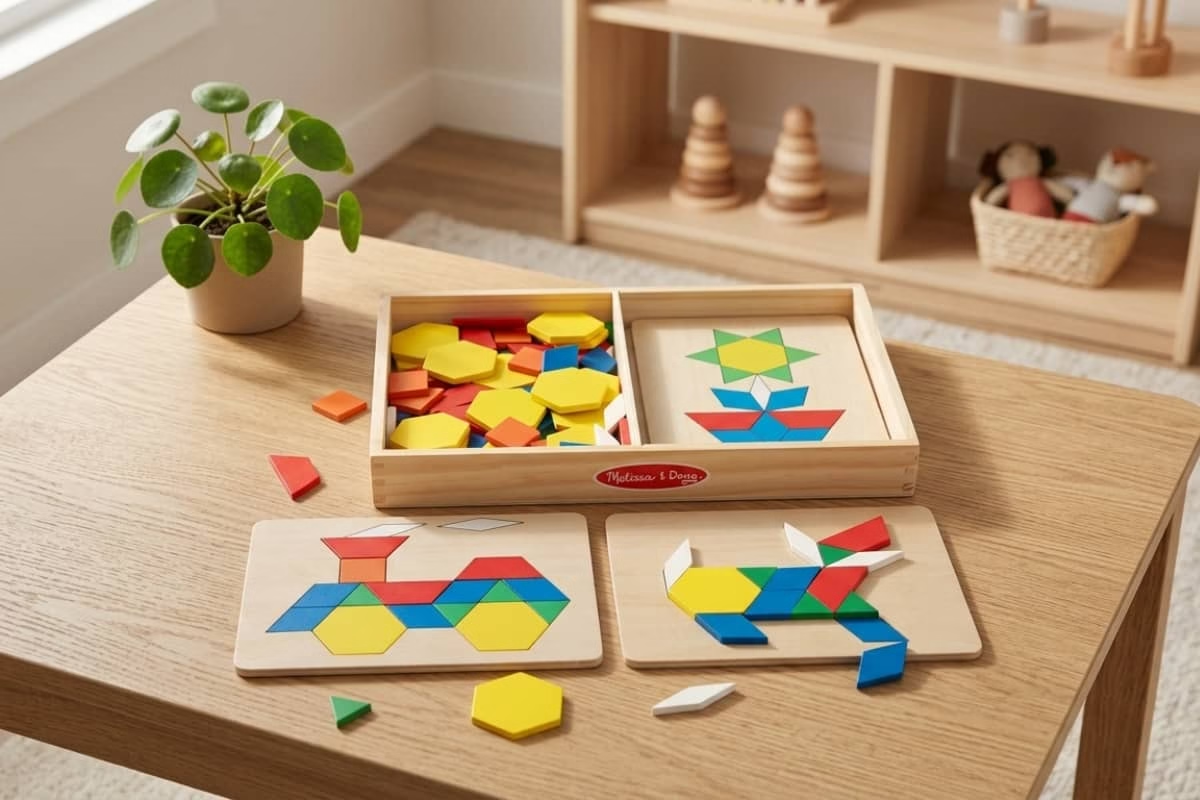
1. Melissa & Doug Pattern Blocks and Boards
Best for: Patterns, problem solving, and creative play
What Kids Actually Enjoy
This is one of those toys that does not feel limiting.
Kids usually start by matching shapes to the pattern boards. Once they feel comfortable, they begin making their own designs with the pieces. That shift from following a guide to creating freely is what keeps them coming back to it.
The bright colors and variety of shapes make experimenting easy, so it rarely starts to feel repetitive.
What Parents Should Know
This set comes with 120 wooden shape pieces and double-sided boards, which gives it more variety than most puzzle toys in this category.
The pieces are solid and easy to handle, and the wooden construction holds up well with daily use. It also works for both independent play and time spent together at the table.
One thing worth noting is storage. The wooden tray helps keep things organized, but it does not have a lid, so pieces can scatter if it gets knocked over.
Real World Use
This works especially well during quiet time or when you want something screen-free that genuinely holds attention.
There is always a clear goal, whether that is completing a pattern or building something original. That makes it easier for kids to stay focused compared to more open-ended toys.
It also grows with your child. Younger preschoolers focus on matching shapes, while older ones start creating more complex, detailed designs on their own.
Pros
- Keeps kids focused longer than most puzzle toys
- Combines guided play with creative freedom
- Supports early math and spatial reasoning
- Durable wooden pieces that hold up well
- Suitable for a wide age range
Cons
- Small pieces make it unsuitable for children under 3
- Limited number of pattern boards included
- Storage tray does not have a secure lid
Best For
Preschoolers who enjoy puzzles, building, or working through something step by step.
Why It Stands Out
This set covers multiple skills without feeling complicated. Kids can sort, match, count, and build using the same pieces, which makes it one of the more versatile options worth adding to your home.
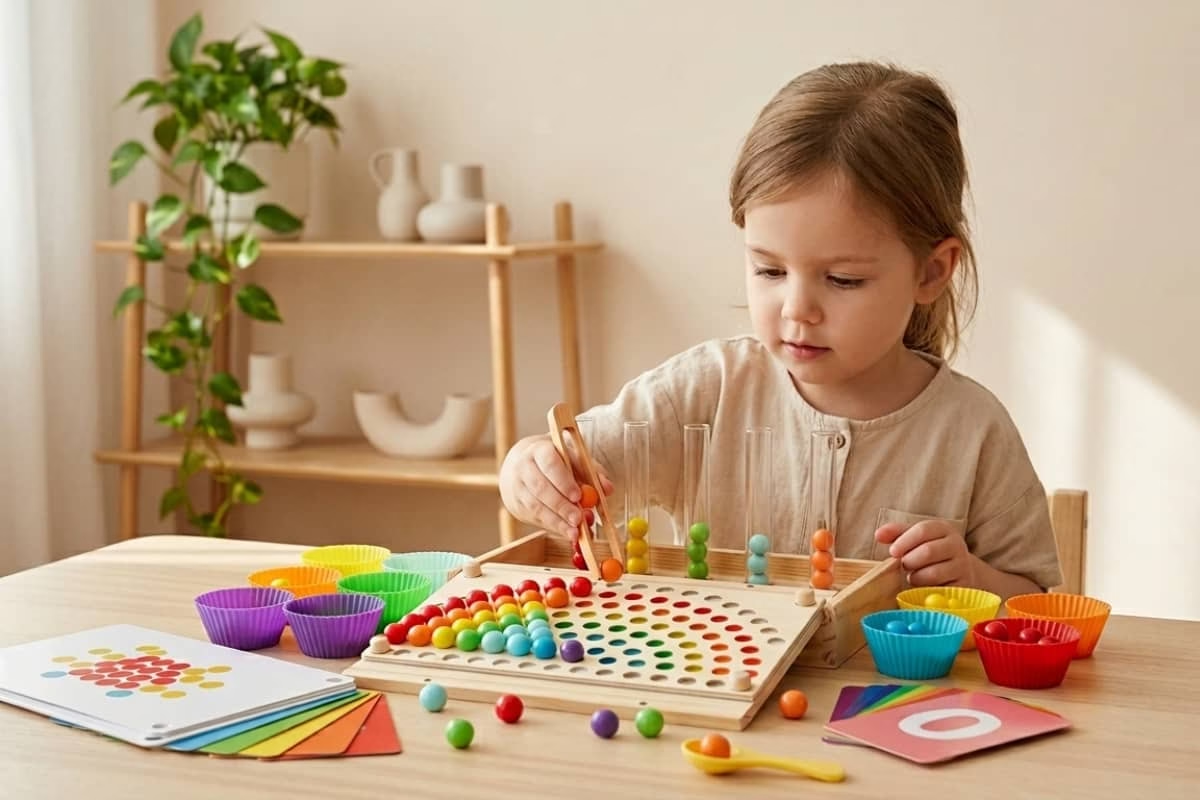
2. INIFEDALA Montessori Counting and Color Sorting Toy Set
Best for: Fine motor skills, color sorting, and focused hands-on play
What Kids Actually Enjoy
This feels more like a hands-on activity than a typical toy.
Kids start by picking up the small balls and placing them into the board with their hands. After that, they move on to the tweezers or spoon, which adds a layer of challenge and keeps them interested as their skills improve.
The bright colors and clear layout make it obvious what to do, so kids tend to stay with it instead of drifting to something else.
What Parents Should Know
The set includes a wooden board, colored balls, sorting cups, pattern cards, and tools like tweezers and a spoon. That variety means multiple ways to play without needing to add anything extra.
It is particularly good for building hand control. Picking up and placing small pieces develops the kind of coordination that carries over into writing and drawing later on.
Because of the small pieces, this works best with supervision and is better suited for preschoolers rather than younger toddlers.
Real World Use
This is a solid option when you want something that keeps your child sitting and genuinely engaged.
It works well for quiet time, table activities, or more focused play sessions. Some kids follow the pattern cards, while others just sort colors into the cups.
Either way, there is a clear task involved, which helps kids stay on it longer than with more open-ended toys.
Pros
- Strong focus on fine motor development
- Multiple ways to play within one set
- Keeps kids engaged for longer stretches
- Bright colors make it easy to understand and use
- Tools add a graduated challenge as skills develop
Cons
- Small pieces require adult supervision
- Takes a bit more time to set up and clean up
- More structured than simple open-ended toys
Best For
Preschoolers who enjoy sorting, hands-on tasks, and activities that require focus and precision.
Why It Stands Out
This is one of the better options for building hand control in a way that actually feels like play.
Rather than just moving pieces around, kids are practicing more precise, deliberate movements, which makes it genuinely useful as they grow.
Buying Guide: Choosing the Right Montessori Toy
Once you have a few good options in front of you, the next step is narrowing down what actually fits your child right now.
Start with your child’s current interests
Look at what your child already enjoys. If they keep stacking things, a building or balancing toy will get used far more than something unfamiliar. If they like pouring water or handling small objects, practical life sets or sorting toys are the better fit.
Match the difficulty level
A toy that is too easy gets boring fast. One that is too hard gets ignored. The right choice is something your child can mostly manage, with just enough challenge built in to keep it interesting.
Think about how it will be used at home
Some toys need a flat surface or extra space to work well. Others can be picked up and used anywhere. Choosing something that fits your actual setup makes it much more likely your child will reach for it regularly.
Quality over quantity
A few well-chosen toys will get far more use than a large pile of random ones. Montessori-style play works best when kids can settle in and focus, not when they are surrounded by too many options.
FAQ
What age are Montessori toys best for?
Montessori toys work especially well for preschoolers because this is when kids start wanting more independence. They can focus for longer periods and genuinely enjoy repeating activities as they get better at them.
Are Montessori toys better than regular toys?
They are not necessarily better, but they are designed differently. Montessori toys prioritize hands-on learning and independence, while many traditional toys are built primarily around entertainment.
Do Montessori toys need to be wooden?
No, but simple materials tend to work better. Wood and fabric are easier to handle and less distracting than toys loaded with lights and sounds.
How many Montessori toys should a preschooler have?
A small rotation works best. Keeping around 5 to 8 toys available at a time helps kids stay focused and actually engage with what is in front of them.
Are Montessori toys worth the cost?
They can be, especially when they get regular use. A well-chosen toy that keeps your child engaged for months is usually better value than cheaper options that are forgotten within a week.
Final Thoughts
The best Montessori toys for preschoolers are not the most expensive or elaborate ones. They are the ones your child keeps coming back to.
Simple toys that encourage hands-on play tend to hold attention longer and build real skills along the way. When a toy lets a child explore, repeat, and figure things out independently, it becomes far more than something to pass the time.
Focusing on how your child actually plays, rather than what looks impressive, makes it much easier to choose toys that get picked up every single day.
That is what makes the biggest difference over time.
Related posts:
 10 Best Educational Toys for Toddlers (Christmas 2026 Gift Guide)
 9 Best STEM Toys for Kids Age 8–12 That Don’t Get Boring Fast
 Straw Constructor Toy Review
 Magnetic Tiles Building Blocks STEM Review
 Aitbay Cool Math Game Review
 10 Best Indoor Toys for Active Kids (2025 High-Energy Gift Guide)
 Magnetic Wooden Fishing Game Toy Review
 ThinkFun Gravity Maze Marble Run Game Review