Cascadia Board Game Review
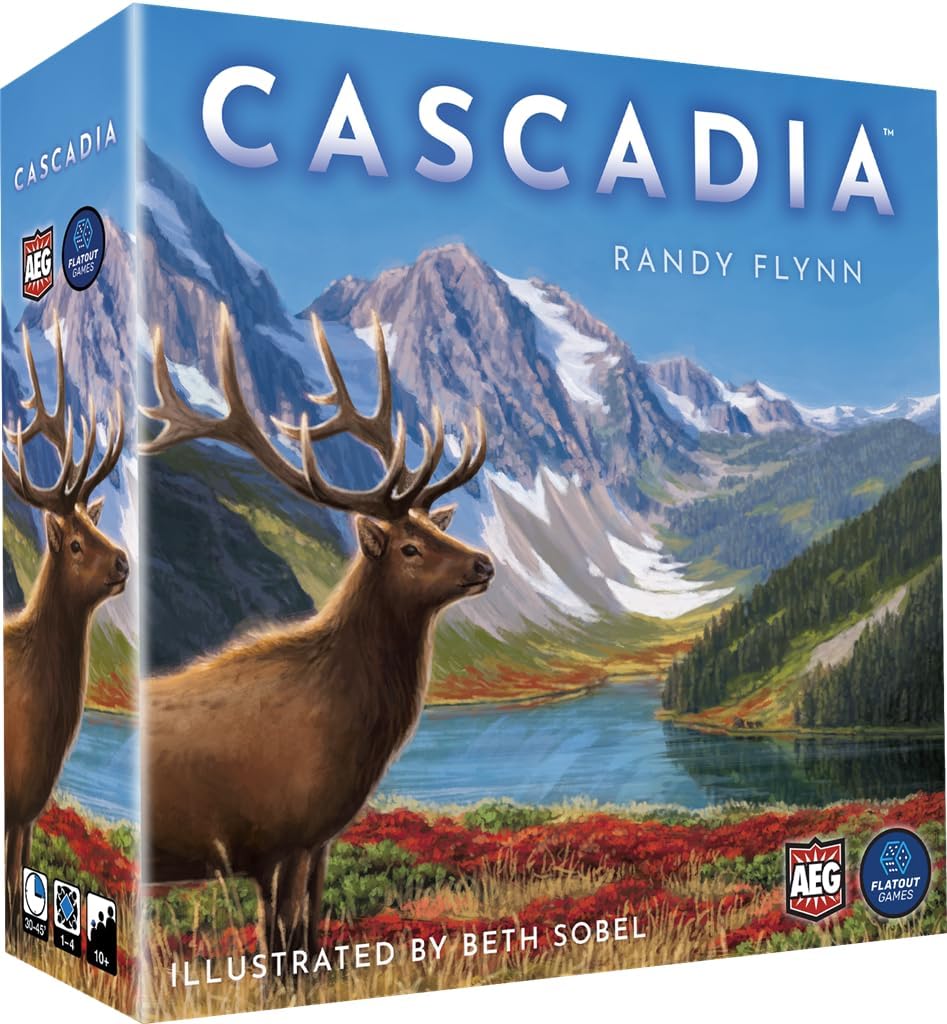
Step into the Pacific Northwe’st with Alderac Entertainment Group’’s (AEG) Cascadia board game. This award-winning tile-placement game challenges you to build the most balanced ecosystem in the region. Turns are quick to learn, but the spatial puzzle keeps things genuinely interesting. With variable scoring goals each game, 1-4 players face a different challenge every time they sit down.
Setup takes about 5 minutes and a full game runs 30-45 minutes,
which makes Cascadia a solid pick for game nights when you want real depth without a long time commitment. It works equally well with friends, family, or solo.

Why Consider This Product?
Cascadia gives you a hands-on way to think about ecosystems without it ever feeling like a lesson. You’re building nature corridors, placing wildlife tokens, and working to create the highest-scoring habitat you can. The Pacific Northwest theme is well-executed, and the game holds up across different ages and experience levels.
The variable scoring goals shift the puzzle with every play, so you’re not just running the same strategy over and over.
There’s solid evidence that nature-focused games can spark genuine interest in conservation topics, particularly for younger players.
Working through the game’’s habitat-building challenges, players naturally start thinking about how ecosystems connect and why balance matters. It’s a low-key way to build environmental awareness without it feeling like a lecture.
Cascadia has been recognized by environmental organizations including the National Wildlife Federation and the Sierra Club for its educational value. Players frequently note in reviews that the game’’s a natural conversation starter and holds up well as a shared activity for groups where not everyone plays board games’regularly.
Features and Benefits
Explore the Pacific Northwest
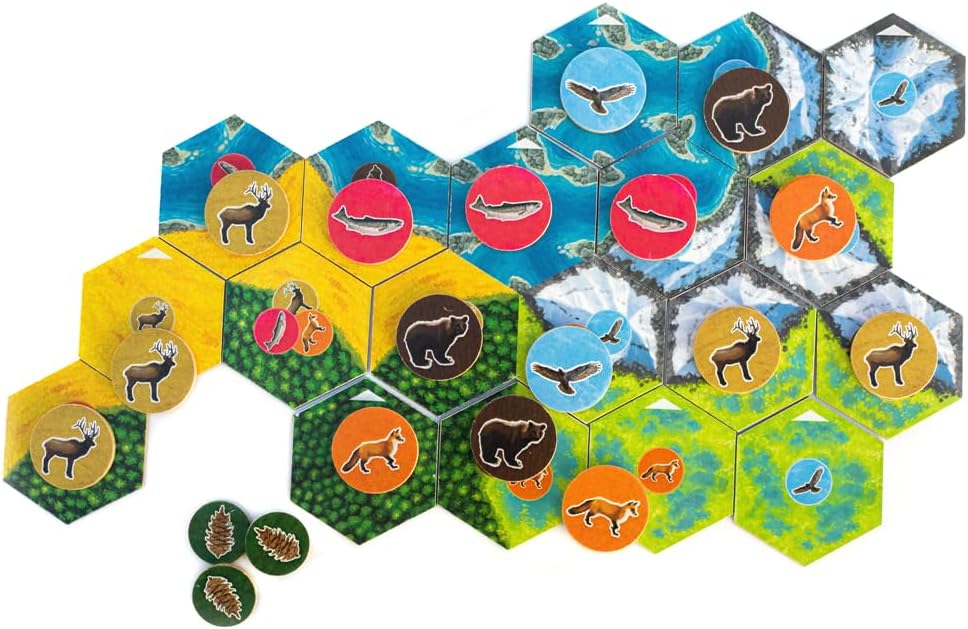
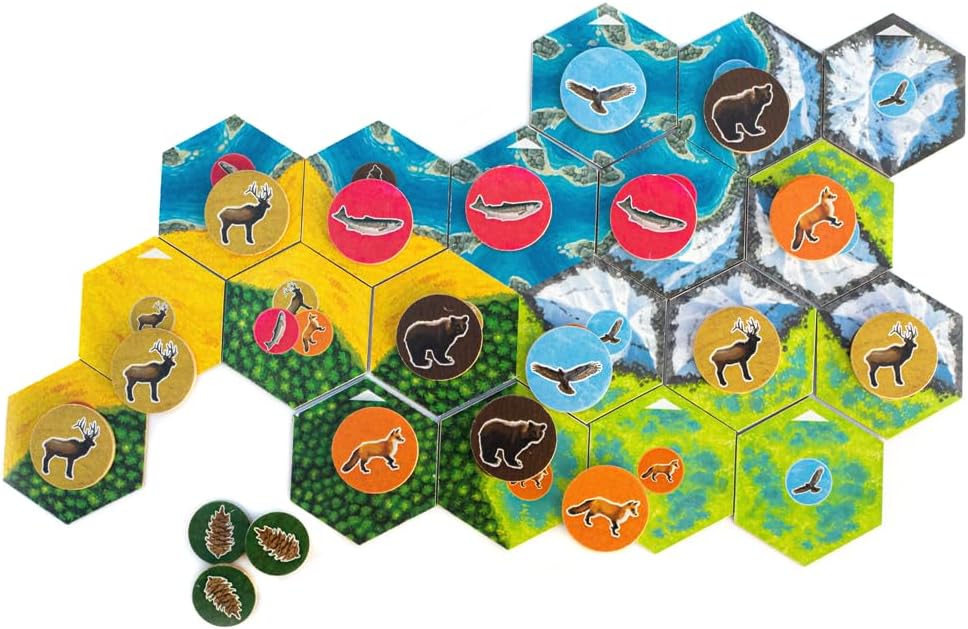
Cascadia captures the look and feel of the Pacific Northwest through its artwork and ecosystem-based design. You’re placing terrain tiles featuring forests, wetlands, mountains, and prairies, each home to different wildlife. The naturalistic feel sets it apart from more abstract tile-placement games.
Build Nature Corridors
Connecting habitats to form nature corridors is central to how Cascadia scores. The longer and more complete your corridors, the more points you earn. This adds a spatial planning layer that rewards players who think a few turns ahead rather than just reacting to what’s on the table.
Attract Wildlife
Each turn, you place a wildlife token on a terrain tile while trying to meet that animal’s specific scoring conditions. Bears, salmon, elk, foxes, and hawks all score differently depending on how they’re arranged on your board. Getting the placement right is where most of the strategic satisfaction comes from.
Variable Scoring Goals
Cascadia uses scoring cards that rotate from game to game, so you’’re never chasing the same objective twice. This keeps things fresh without requiring you to learn new rules each session. It’s the main driver behind the game’s strong replay value.

Product Quality
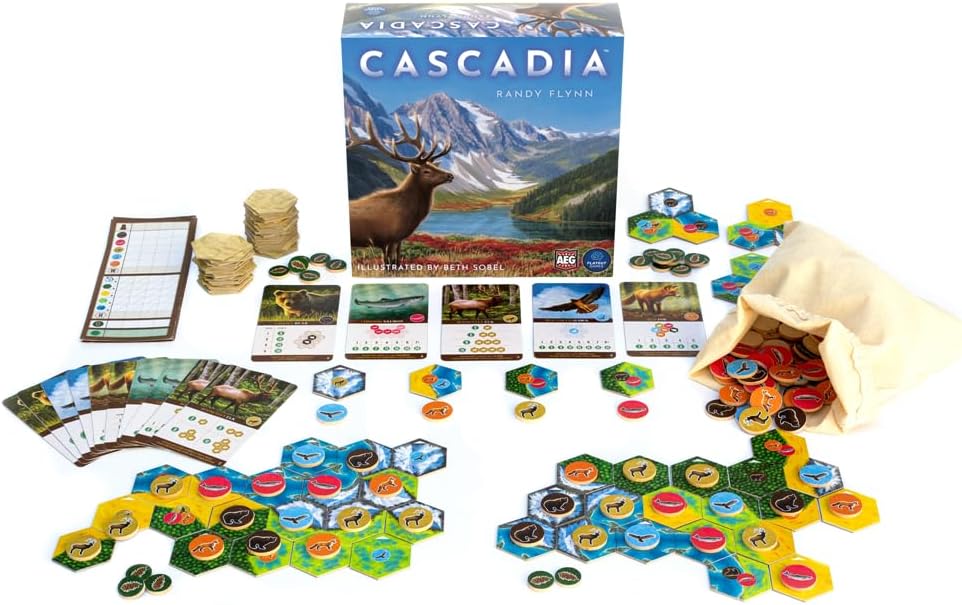
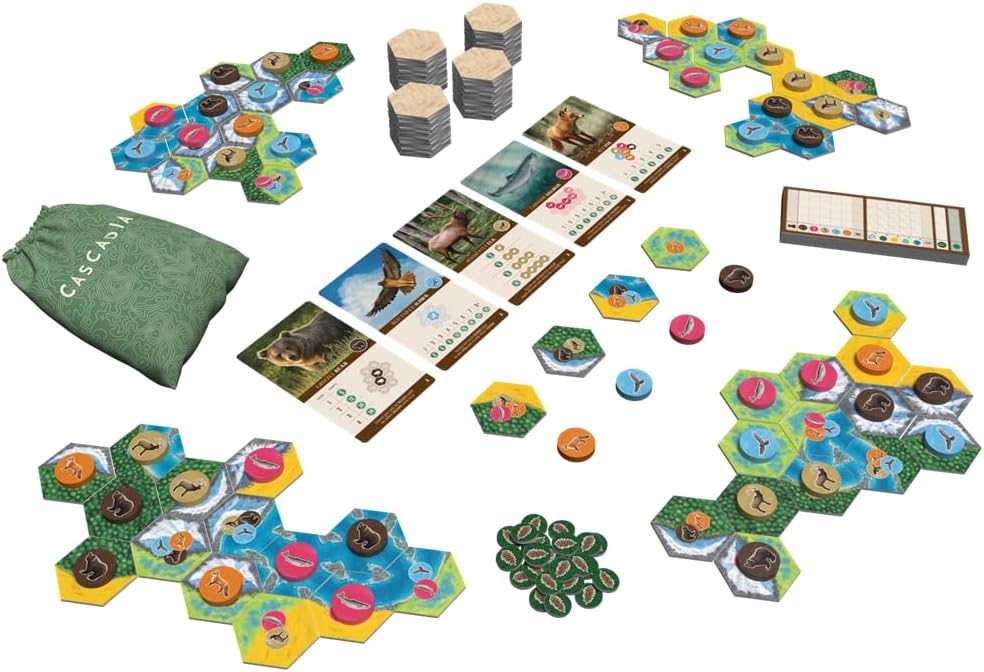
FlatOut Games put real care into the physical quality of Cascadia. The tokens are thick and satisfying to handle, the tiles are sturdy, and the artwork is genuinely attractive. The components hold up well with regular play and give the game a premium feel on the table.
What It’s Used For
Fun and Engaging Entertainment
Cascadia works as a casual game night pick that still has enough depth to keep experienced players engaged. Whether you’’re playing solo or with a group, the’combination of tile placement, wildlife scoring, and shifting goals makes each session feel worth finishing.
Educational Tool for Environmental Awareness
The game quietly introduces how ecosystems work, why habitat connectivity matters, and how different species need different conditions to survive. Kids absorb this through gameplay rather than explanation. It’s a useful way to open conversations about conservation without any preachiness.
Mental Stimulation and Skill Development
Cascadia asks you to think spatially, look ahead, and weigh short-term gains against long-term scoring potential. As you’’re building your ecosystem, you’re constantly reading patterns and making trade-offs. It’s a solid mental workout for anyone who enjoys puzzle-style thinking.
Social Bonding and Connection
Cascadia works well as a shared activity because it’s easy enough to explain to someone who has never played a board game before, but interesting enough to hold the attention of seasoned players. The competitive scoring gives everyone something to aim for, while the nature theme keeps the atmosphere relaxed rather than cutthroat.

Product Specifications
| Item Specifications | Details |
|---|---|
| Players | 1-4 |
| Setup Time | 5 minutes |
| Playtime | 30-45 minutes |
| Recommended Age | 10+ |
| Designer | FlatOut Games |
| Publisher | Alderac Entertainment Group (AEG) |
| Theme | Pacific Northwest |
| Weight | 2.9 pounds |
| Dimensions | 11.6 x 11.6 x 2.6 inches |
Who Needs This
Cascadia is a great fit for nature lovers, puzzle fans, and anyone who wants a board game that’s approachable without being shallow. Whether you’’re new to board games or have a shelf full of them, this one delivers something genuinely satisfying. Families with kids aged 10 and up will find it strikes a nice balance between accessible and mentally engaging.
Pros and Cons
Pros:
- Variable scoring goals that shift every game
- High-quality artwork and components
- Builds environmental awareness naturally through gameplay
- Works solo or with up to four players
- Fast setup and a playtime that fits busy evenings
Cons:
- Caps at four players, which can be limiting for larger groups
- Extended play may eventually call for expansions to keep variety going
FAQ’s
- Can you play Cascadia with just two players? Yes, the game scales well at two players. The experience feels just as balanced and engaging at a smaller table as it does with a full group.
- Are there different difficulty levels? Cascadia doesn’t use traditional difficulty settings, but the variable scoring cards naturally produce different challenges each session. You can also layer in more complexity by adding’expansions once you’re comfortable with the base game.
- How long does it take to learn the game? The rules are clear enough that new players can get up to speed with one short read-through. Within the first couple of rounds, most people have a solid handle on the’core mechanics and can start making real strategic decisions.
What Customers Are Saying
Players frequently praise Cascadia for its’artwork and how quickly it draws people in. Reviews often point to the’educational angle as a welcome bonus, particularly for families. Replayability comes up again and again as a highlight, with players noting the variable scoring goals keep the game from getting stale.
Overall Value
Cascadia delivers strong value for the price. The components are well-made, the gameplay holds up over repeated sessions, and the replay value is high enough that it won’t collect dust after two plays. Whether you’’re buying it for game nights, family play, or solo sessions, it earns its place in any collection.
Tips and Tricks for Best Results
- Plan ahead: Scan the available tiles and tokens before committing to a placement. A little forward thinking goes a long way in Cascadia.
- Balance your wildlife goals: Focusing too heavily on one or two animals often leaves points on the table. Spreading your effort across multiple wildlife types tends to produce better scores.
- Build habitat corridors early: Getting corridors started in the first few turns gives you more space to extend them as the game develops, which can add up to a significant point advantage.
- Stay flexible: Each game’s scoring setup is different, so be willing to shift your approach mid-game rather than holding onto a strategy that no longer fits the board.
Final Thoughts
Product Summary
Cascadia is an award-winning tile-placement game set in the Pacific Northwest. You’re building habitats, connecting corridors, and placing wildlife to score points based on goals that change with every game. It plays in under an hour, works across a wide age range, and holds up well over repeated sessions.
Final Recommendation
Whether you’’re looking for a board game that’s easy to get into but offers real strategic depth, Cascadia is worth picking up. The quality is solid, the theme is well-executed, and the variable goals mean you won’t exhaust it quickly. It’s a strong choice for families, couples, solo players, and anyone who enjoys a well-designed puzzle game.

Disclosure: As an Amazon Associate, I earn from qualifying purchases.
If Cascadia sparks that same curiosity about the natural world in your kids, the National Geographic Mega Gemstone Dig Kit is another hands-on option that keeps nature exploration going beyond game night.
If you have kids who light up during those ecosystem conversations, our National Geographic Earth Science Kit review covers a kit that channels that same interest into tactile, science-based play.
Related posts:
 Gut Bustin’ Games Redneck Life Board Game Review
 My Lil Everdell Review
 Trekking Through History Board Game Review
 Hasbro Twister Party Classic Board Game Review
 Ticket to Ride Board Game Review
 Hasbro Gaming The Game of Life Game Review
 Candy Land Kingdom of Sweet Adventures Kids Board Game Review
 Hasbro Gaming The Game of Life: Super Mario Edition Board Game Review