Don’t Wake Daddy Preschool Game Review
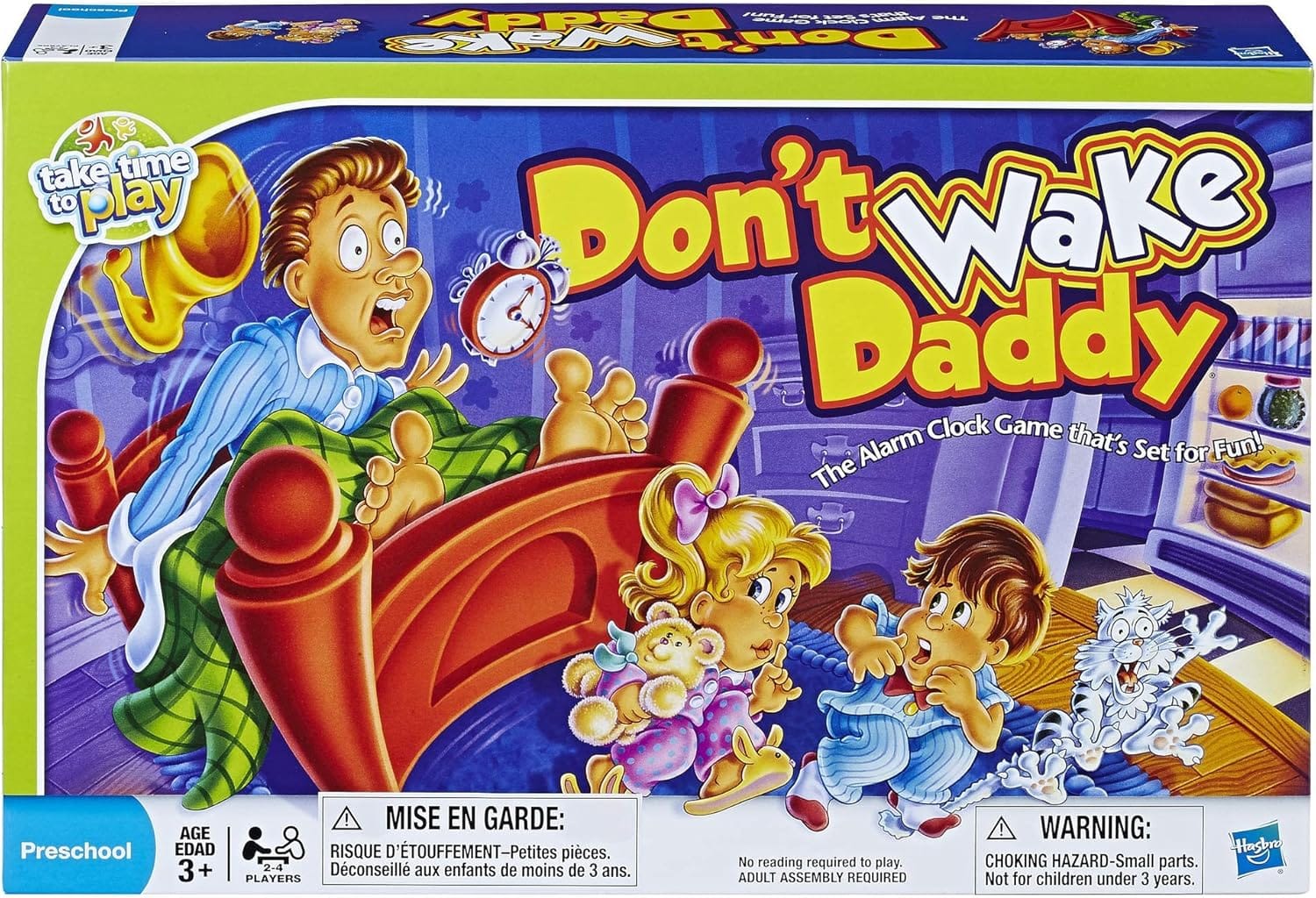
Don’t Wake Daddy from Hasbro Gaming hits a sweet spot for preschool-age kids.’t Wake Daddy Preschool Game turns a simple midnight snack run into a suspenseful adventure kids genuinely love. Players sneak past obstacles on their way to the refrigerator without waking Daddy up. It’s the kind of game that gets kids sitting forward on the edge of their seats.’The alarm clock button keeps every turn unpredictable. One wrong move and Daddy might wake up, sending everyone into giggles. That mix of suspense and silliness is exactly what makes it click for this age group.
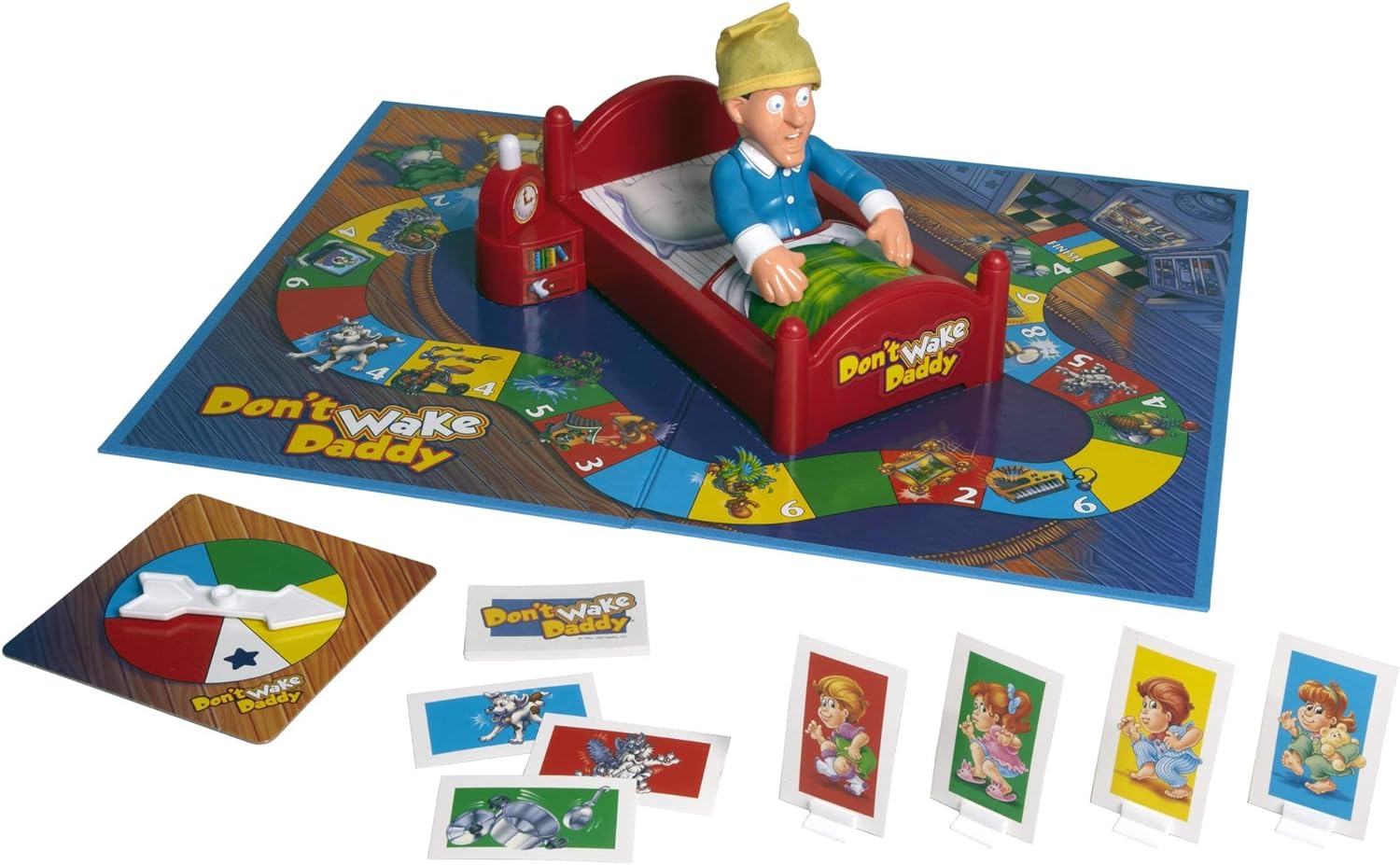
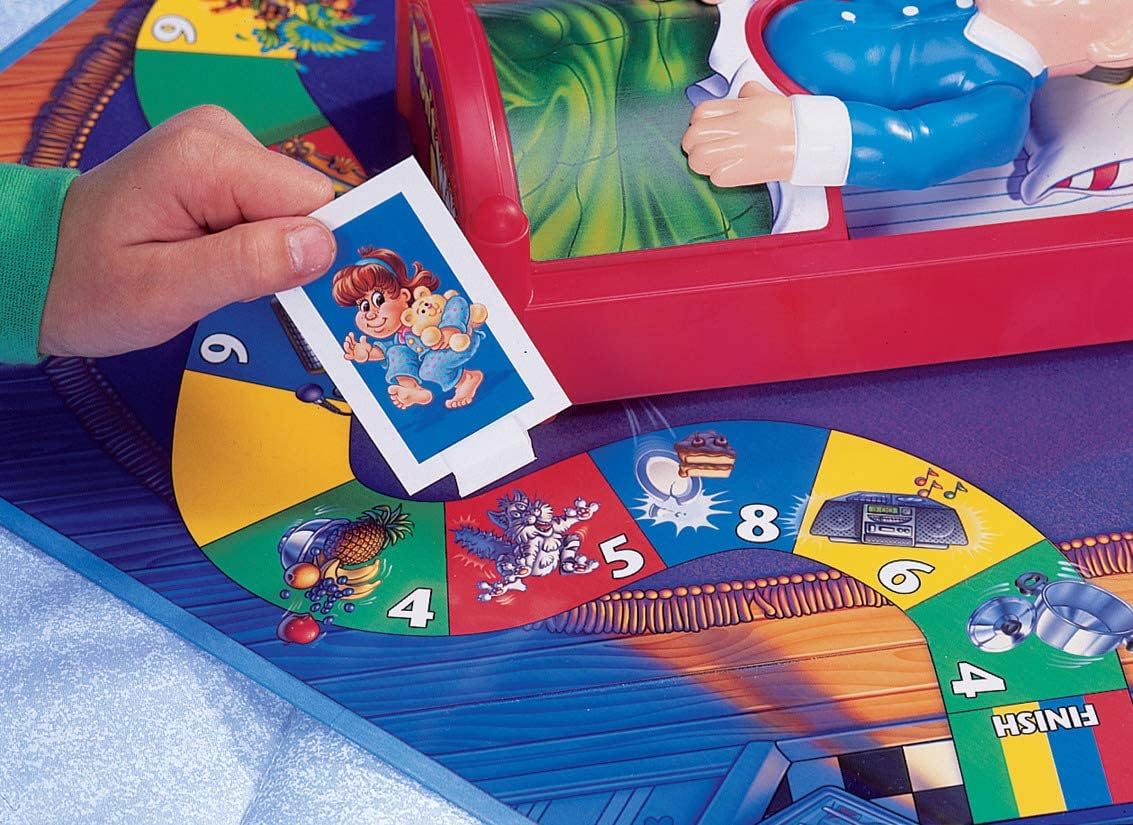
Players match their cards to spaces on the gameboard, racing to be the first to land on the Rainbow Refrigerator space and win the round.
It’s a simple goal, but getting there is where all the fun happens.


Why Consider This Product?
If your preschooler is ready to start playing games with actual rules, the Hasbro Don’t Wake Daddy Preschool Game is worth a look.’It’s built for kids ages 3 and up, so the rules are simple enough for little ones to actually follow.
Rounds are short and easy to pick up, making it a natural fit for kids who are just getting comfortable with structured play.
The concept is easy to understand, which is a big reason kids keep asking to play it again.
Play is a core part of how young children learn and develop.’Games like Don’t Wake Daddy give that learning a structure kids respond to naturally.’The back-and-forth gameplay encourages focus, turn-taking, and early social awareness without ever feeling like a lesson.
The game has picked up solid reviews from parents looking for something beyond basic toddler toys.’It strikes a balance between being genuinely fun and actually building skills, which is not always easy to find in this age range. Parents have noted how well it holds a child’attention from start to finish from start to finish compared to simpler games.’Kids tend to stay focused through the whole game rather than wandering off mid-round,’which is a real win with the preschool crowd.
Features and Benefits
Creative Thinking and Problem-Solving
Navigating the gameboard pushes kids to think ahead about which card to play and where to move. They start noticing patterns and figuring out the best path to the refrigerator. That kind of low-stakes decision-making is solid early practice for problem-solving.’When kids hit a setback, the game naturally nudges them to keep going and try a different approach. If you want to pair this game with a toy that keeps that problem-solving momentum going, our TALONITE Learning Toy review looks at another option built around early thinking skills for the preschool crowd.
Matching and Memory Skills
The card-matching mechanic gives kids a reason to pay attention and recall what they’ve seen. Placing cards on the right board spaces builds concentration in a way that feels like play rather than practice. Kids naturally start developing basic strategy the more they play.
Fine Motor Development
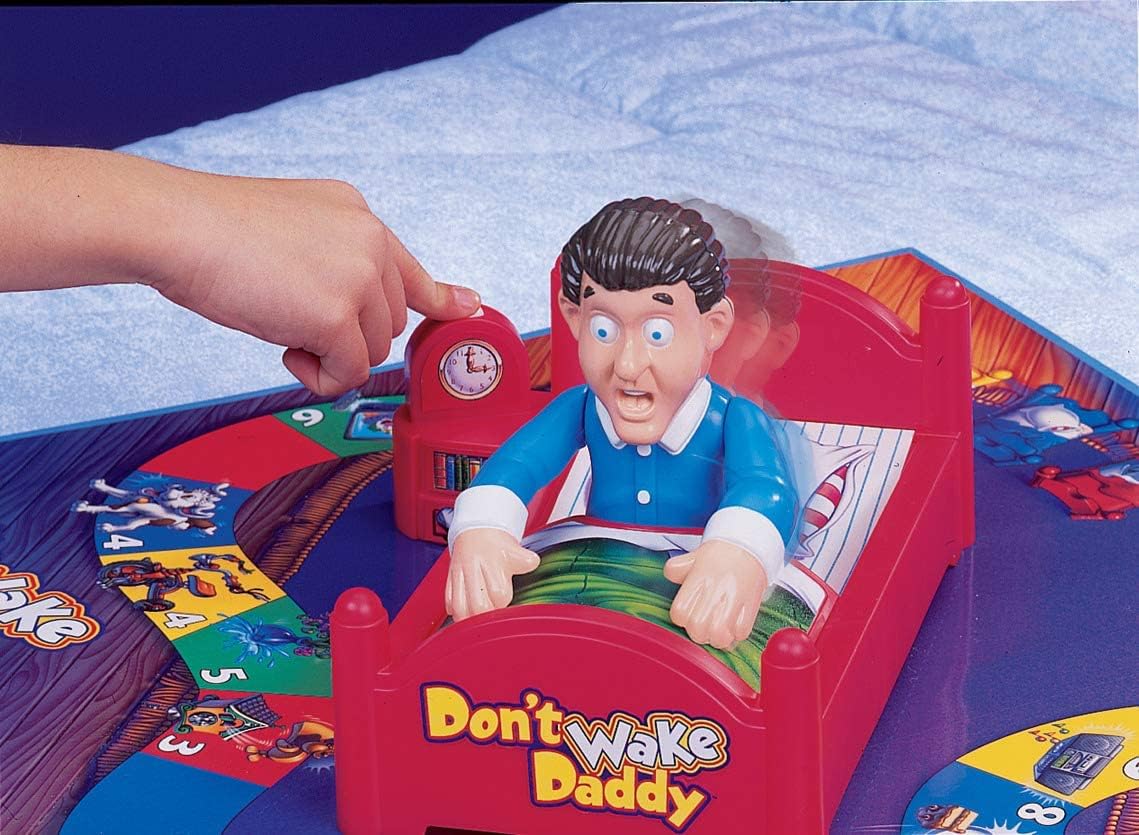
Pressing the alarm clock button, picking up cards, and moving pieces around the board all give small hands useful practice.’These actions build hand-eye coordination and fine motor control, both of which come up constantly in early childhood. The physical interaction also makes the game feel more exciting than anything on a screen.
Social Interaction and Communication
Don’t Wake Daddy supports two to four players, so kids are always playing alongside someone else.’Taking turns, reacting to each other’s moves, and sharing in the suspense are all built into the experience.’Those moments help kids build communication skills and learn how to handle both winning and losing in a relaxed, low-pressure setting.

Product Quality
Hasbro has a long track record with preschool games, and Don’t Wake Daddy reflects that experience. The components feel solid and are made to handle repeated play from young kids.’The gameboard, cards, and alarm clock piece are all durable enough to hold up to enthusiastic three-year-olds.
Safety was also a clear priority in the design.’There are no small parts that pose a choking risk, and it meets current safety standards for the age range. If you’ve bought Hasbro games before, you already know what to expect in terms of build quality.
What It’s Used For
Engaging Entertainment
The most straightforward use for this game is keeping kids happily occupied.’Whether it’s a rainy afternoon or a family game night, it gives kids something to focus on that doesn’t involve a screen.’The suspense mechanic keeps energy high throughout, and rounds are short enough that kids stay locked in from beginning to end.
Educational Tool
Beyond being fun, Don’t Wake Daddy quietly builds skills kids need at this stage.’Matching, memory, turn-taking, and fine motor control all come into play during a normal session. Kids are learning without realizing it, which is usually the most effective way to teach preschoolers anything.
Parent-Child Bonding
Sitting down to play this game with your child gives you both something to focus on together.’It creates natural conversation, shared laughs when Daddy wakes up, and real excitement when someone wins. Those small moments add up and give kids positive memories tied to family time.
Stress Relief
Kids this age can feel overwhelmed even if they can’t always put it into words.’A short, fun game gives them a chance to shift focus, laugh a little, and reset. The playful theme and clear goals make it easy for kids to jump in and enjoy without any pressure.

Product Specifications
| Specifications | Details |
|---|---|
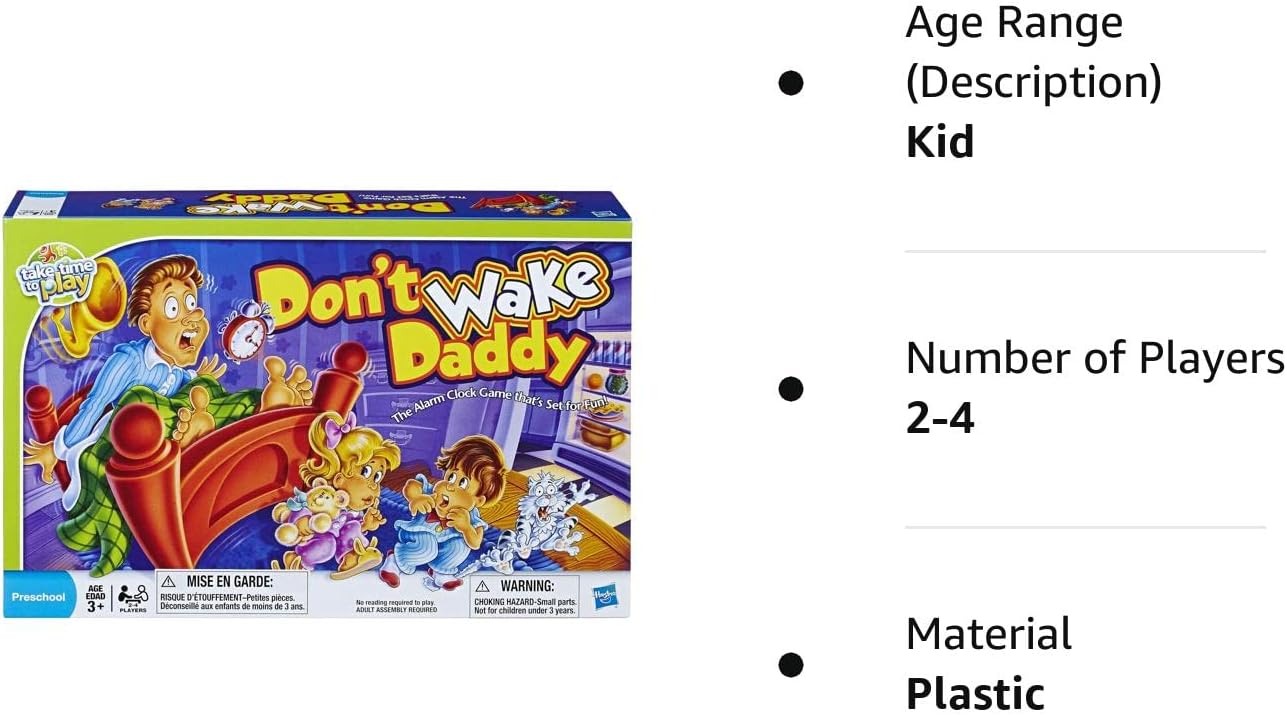
| Age Range | 3 years and up |
| Players | 2-4 players |
| Game Contents | Gameboard, cards, alarm clock |
| Game Duration | Approximately 20 minutes |
| Manufacturer | Hasbro Gaming |
| Exclusive to Amazon | Yes |
Who Needs This
This game is a good fit if you have a child between 3 and 6 who is starting to show interest in games with real rules.’It works well for parents, grandparents, or caregivers who want something structured and fun without a steep learning curve. The rules are simple enough for a 3-year-old to follow but still engaging enough to hold the attention of older siblings joining in.
Pros and Cons
Here’s an honest look at what works and what to keep in mind before buying Don’t Wake Daddy.’Every game has trade-offs, and it’s worth knowing what you’re getting into.
Pros:
- Suspenseful gameplay that holds kids’s attention
- Builds cognitive, social, and fine motor skills naturally through play
- Solid construction that holds up to regular preschooler use
- Safe for the age group with no small hazardous parts
- Works well as a parent-child activity
Cons:
- Gameplay can feel repetitive after many sessions
- Younger 3-year-olds may need a parent nearby to help with the rules at first
FAQ’s
- How many players can play Don’t Wake Daddy?’
- The game supports 2 to 4 players, making it a good fit for small family game nights.
- Is it safe for a 3-year-old?
- Yes, it’s designed for ages 3 and up and meets current safety standards with no small choking hazard parts.
- How long does a game take?
- A typical game runs about 20 minutes, which is a solid length for preschool attention spans.
- Can older kids or adults play too?
- Older kids and adults can absolutely join in, especially when playing alongside a younger child. It works best as a mixed-age family game.
What Customers Are Saying
Parents who picked up Don’t Wake Daddy for their kids have mostly had positive things to say.’The gameplay, durability, and educational angle all come up repeatedly in reviews.
Kids get genuinely excited about playing it, and a number of parents mentioned it becoming a regular pick for family game nights. The social element, specifically playing together and reacting to the suspense as a group, stood out as a highlight.
Overall Value
For a game at this price point, Don’t Wake Daddy delivers solid value.’It keeps kids entertained, builds real skills, and holds up physically through lots of play.
For parents who want something that goes beyond pure entertainment, this game earns its place in a preschooler’s game rotation.
Tips and Tricks For Best Results
A few small adjustments can make your Don’t Wake Daddy sessions even better.’Here’s what tends to work well:
- Encourage creativity: Ask your child what they think the best move is before they play their card. Getting them to explain their thinking out loud builds reasoning skills and makes the game feel more engaging.
- Practice turn-taking: Use the game as a natural moment to talk about waiting your turn and being a good sport. It comes up organically and feels less like a lecture when it’s tied to something they’re genuinely enjoying.
- Create themed game nights: Build a little atmosphere around the game to make it feel special.’A fun snack, dimmed lights, or a silly Daddy-snoring sound effect can turn a regular game night into something kids ask to repeat.
- Celebrate achievements: Make a small deal of every win, whether your child reaches the Rainbow Refrigerator first or makes it through without waking Daddy.’Positive reactions from you go a long way in building confidence and making the game feel rewarding.
Final Thoughts
Product Summary
The Hasbro Gaming Don’t Wake Daddy Preschool Game is a genuinely well-designed game for this age group. The concept is fun, the rules are simple enough for a 3-year-old to follow, and the game builds real skills without ever feeling like schoolwork. Creative thinking, card matching, fine motor practice, and social interaction all come into play naturally during a normal session.’It’s a well-rounded pick for any family with kids in the 3 to 6 range.
Final Recommendation
If you’re looking for a preschool game that’s actually fun and not just something adults tolerate, Don’t Wake Daddy is a genuine recommendation.’Kids respond to the suspense, rounds move quickly, and the skills it builds are genuinely useful at this age. It’s a solid buy for family game nights or as a gift for a preschooler.’Replay value is strong, and the quality holds up to the kind of repeated, enthusiastic use that comes when a game becomes a household favorite.
Disclosure: As an Amazon Associate, I earn from qualifying purchases.
If you are also looking for screen-free ways to build early learning skills, our Kids Toddler Talking Flash Cards review covers an interactive option that works well alongside games for this age group.
Related posts:
 BLANK SLATE™ – The Game Review
 Hasbro Gaming Sorry! Game Review
 ThinkFun Gravity Maze Marble Run Game Review
 Gut Bustin’ Games Redneck Life Board Game Review
 Zeyce Tic Tac Toe Game Review
 Hasbro Jenga Classic Game Review
 USAOPOLY TAPPLE® Word Game Review
 Candy Land Kingdom of Sweet Adventures Kids Board Game Review